
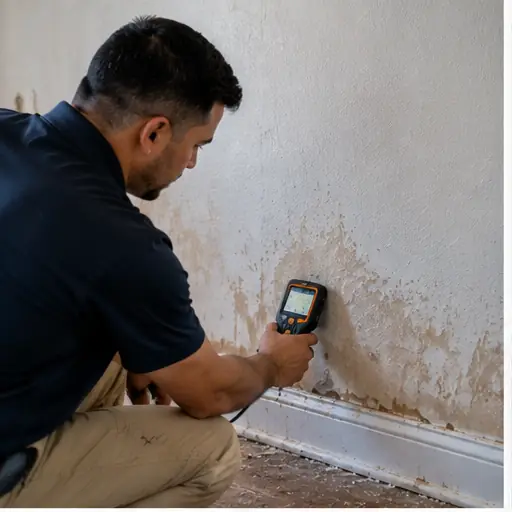
First identify the water source and exposure
A fresh supply-line leak and outdoor floodwater create different risks. What the water touched before reaching the studs also matters. If sewage or outdoor floodwater was involved, do not assume the same drying and cleaning approach used for a clean indoor leak.
Inspect the whole wall assembly
Drywall, paper facing, insulation, sheathing, base plates and flooring can trap moisture around framing. Access may be needed to check the wood faces and concealed spaces. A dry paint surface says little about a stud behind it. See wet drywall decisions for the wall covering.
When drying in place may be possible
Sound framing affected by a recent clean-water event may be suitable for controlled drying if the water source is stopped, wet adjacent materials are addressed and readings show progress. The plan may use airflow, dehumidification and access to the cavity. Air movers and dehumidifiers explain the drying system.
When further evaluation or replacement is more likely
Severe warping, splitting, soft or decayed wood, visible microbial growth, contaminated water or an assembly that cannot be cleaned and dried can change the decision. Damage to a load-bearing element should be assessed by an appropriately qualified professional before cutting or replacing it. Do not use a single moisture number to decide structural integrity.
Measure framing before closing the wall
Moisture meters can compare affected lumber with suitable unaffected framing and track readings over time. Species, meter type and temperature can affect interpretation. The drying endpoint should fit the material and planned enclosure; document readings at representative wet locations rather than relying on touch. See how dryness is verified.
Avoid trapping moisture behind new finishes
Closing a wall while framing or adjacent layers remain wet can trap moisture and complicate future inspection. Repairs should follow source correction, material decisions and drying verification. The material salvage guide covers the broader save-or-remove decision.
Oxnard homes and multifamily buildings
A pipe leak in a shared wall, roof intrusion at framing or water migrating from an upper unit may affect areas beyond the first visible stain. Confirm the source and the extent of moisture before planning drywall repair. If structural modifications or significant repairs are needed, check applicable local requirements.
Related Structural Drying Resources
Guidance Behind This Article
These sources describe moisture control, material evaluation and professional drying principles. A property-specific assessment determines the actual plan.
Quick Answers
No. Sound framing may be dried after a suitable clean-water event, but the source, contamination, wood condition and drying progress determine the decision.
There is no fixed time. Saturation, access, airflow, humidity and the assembly affect progress. Use measurements rather than a calendar alone.
Yes, persistent moisture can support mold. Prompt source control and drying matter, and visible growth or contamination can change cleaning and removal decisions.