
First, remove accessible liquid water
If water is pooled on the floor or held in a recoverable covering, extraction reduces the liquid load. Air movers and dehumidifiers work on retained moisture; they are not substitutes for pumping or extracting standing water. The extraction versus drying guide explains where one phase ends and the other begins.
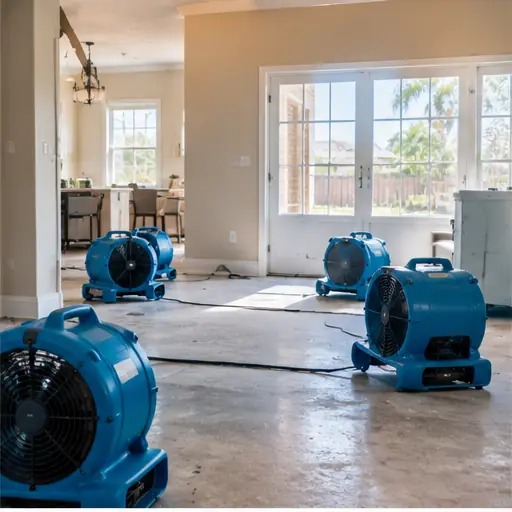
Air movers encourage evaporation
Airflow across a wet material helps carry away the humid layer of air at its surface. Placement matters: a wet wall cavity, the edge of a floor assembly and an open room do not have the same access. More fans pointed randomly at a room do not guarantee that trapped moisture can escape.
Dehumidifiers remove vapor from the air
As water evaporates, it enters the room air. A dehumidifier condenses or otherwise captures that vapor and helps maintain a drying environment. If vapor accumulates, evaporation can slow. Equipment type and capacity depend on the conditions and scope; no single model is right for every job.
Humidity and temperature work together
Relative humidity describes how close the air is to saturation at a given temperature. Temperature changes both evaporation conditions and the amount of vapor air can hold. These relationships are part of psychrometry. A drying plan considers the room environment as well as the wet materials, and adjusts it as readings change.
Material readings determine progress
A thermo-hygrometer can track room temperature and relative humidity. Moisture meters help compare affected materials over time and with appropriate dry reference areas. Equipment should not be removed simply because a surface looks dry. See how professionals verify drying.
When equipment needs adjustment
If readings plateau, the team may need to look for concealed moisture, blocked airflow, insufficient vapor removal or a material that cannot be dried in place. The drying timeline guide explains why duration varies.
Oxnard property considerations
A leak affecting an apartment wall, a kitchen cabinet toe-kick or a subfloor may require different access and equipment placement. Outdoor floodwater or sewage can also change safety and material decisions. Describe the source and affected assemblies before assuming a room fan is enough.
Related Structural Drying Resources
Guidance Behind This Article
These sources describe moisture control, material evaluation and professional drying principles. A property-specific assessment determines the actual plan.
Quick Answers
It can lower room humidity, but wet walls may also need controlled airflow, access and material readings. The plan depends on how deeply moisture entered.
Household fans may help a small clean surface spill, but they cannot establish whether concealed materials are dry. Electrical and contamination hazards also matter.
Stopping it prematurely can interrupt vapor removal while materials still release moisture. Monitoring should guide adjustments and the endpoint.