Water Extraction Focuses on Liquid Water
Extraction is the removal stage. Depending on the loss, water may be collected from hard flooring, carpet, or other accessible surfaces. Efficient extraction can reduce the amount of moisture that later has to evaporate from materials.
Structural Drying Focuses on Absorbed Moisture
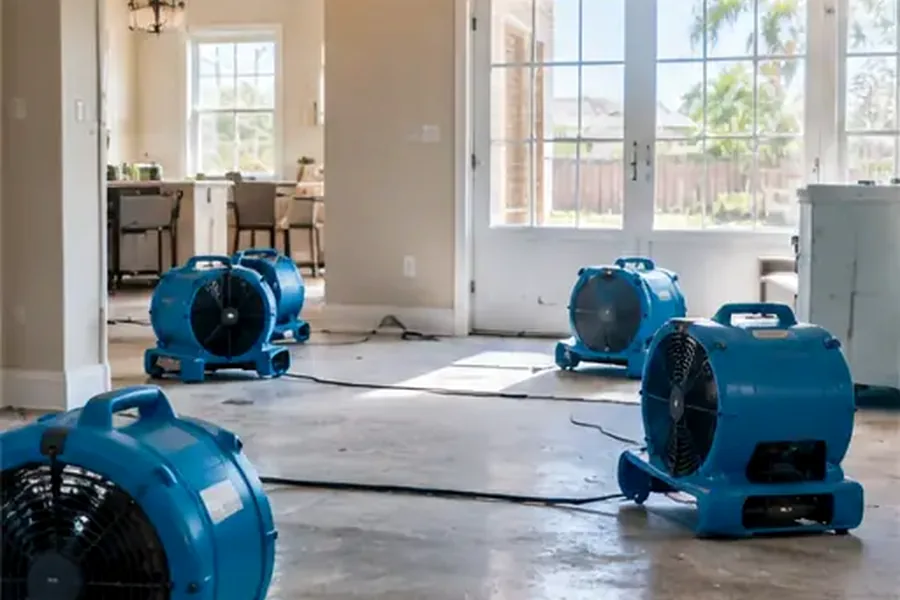
Drywall, wood, subfloors, insulation, and other materials can retain moisture after standing water is removed. Structural drying uses controlled air movement, dehumidification, and monitoring to support evaporation and remove moisture from the air.
Why Extraction Usually Comes First
Leaving removable liquid water in place increases the moisture load and allows continued absorption. When standing water is present, removing it first generally makes the drying phase more efficient and allows affected materials to be assessed more accurately.
Why a Dry-looking Surface Can Be Misleading
Surface appearance is not a dependable measurement of moisture below flooring or inside wall assemblies. Water can move beneath finishes and along seams. Moisture assessment helps determine whether drying goals have actually been reached.
What Equipment Is Used for Each Stage?
Extraction equipment is designed to recover liquid water. Drying setups may use air movers and dehumidifiers, while moisture meters or other measurement tools help track conditions. Equipment should be selected and positioned for the actual materials and affected area.
Does Every Water Loss Need Both?
Not necessarily. A small event with no standing water may need assessment and drying without a major extraction phase. A larger event may require substantial extraction followed by several drying steps. The correct sequence depends on the property, materials, water source, and extent of migration.
Where Mitigation Fits In
Mitigation is the broader effort to limit additional damage and stabilize the property. Extraction and drying can both be parts of mitigation, along with protecting contents, removing unsalvageable materials when appropriate, and controlling affected areas.
EPA Guidance Supports Prompt Drying
The U.S. EPA advises drying wet or damp materials promptly and notes that drying within roughly 24–48 hours after a leak or spill can help prevent mold growth in many cases. That makes the transition from water removal to material drying important.
Which Service Should an Oxnard Homeowner Request?
If there is visible standing water, water extraction is often the immediate need. If surfaces look dry but walls, floors, or cavities may still contain moisture, structural drying and moisture assessment may be more relevant. Emergency losses can involve both.
Related Oxnard Water Damage Resources
Continue with water extraction, structural drying in Oxnard and water mitigation.
Sources and Guidance Behind This Article
This guide is informed by U.S. EPA moisture and mold guidance, California Department of Insurance residential property claims guidance, and City of Oxnard floodplain and recovery resources. Property conditions and insurance coverage vary, so use the guidance that applies to the specific loss.
Need Water Damage Help in Oxnard?
Oxnard AquaFix provides 24/7 emergency water damage restoration for Oxnard properties, including ZIP codes 93030, 93031, 93032, 93033, 93034, 93035, and 93036.
Contact Us