1. How Water Reaches the Subfloor
Water can move through seams in laminate, engineered wood, carpet, vinyl transitions and perimeter gaps. It can also travel from a wall cavity or cabinet base into the floor assembly.
This is why a visible puddle is not a reliable map of the full loss. A water-under-flooring problem may extend into the subfloor even when the finish layer begins to look dry.
2. Plywood, OSB and Other Subfloor Materials Behave Differently
Subfloor materials vary in density, thickness, adhesives, edge treatment and previous condition. Plywood and oriented strand board can absorb water, but the degree of swelling or edge damage can differ. The useful question is whether the material remains stable enough to dry and perform its intended function.
A professional assessment considers both moisture and physical condition. Moisture readings alone do not answer whether a damaged panel should stay or go.
3. Why Water Extraction Is Only the First Step
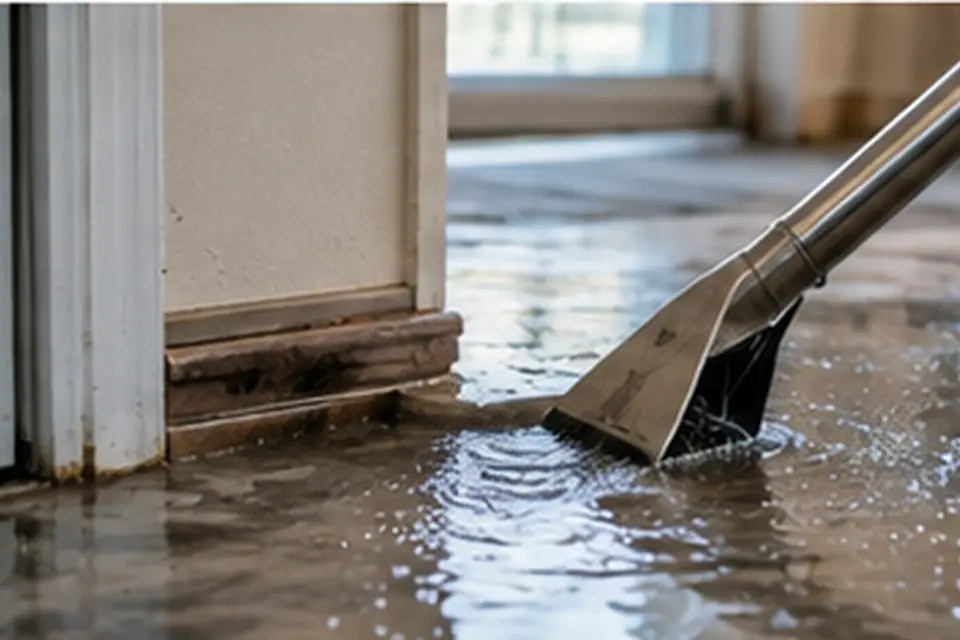
If recoverable water is present above or within an accessible floor system, water extraction can reduce the amount of liquid water in the assembly. But once water has been absorbed into wood-based materials, drying becomes a separate task.
That next stage may use dehumidification, air movement and repeated moisture checks rather than simply more vacuuming.
4. Signs That Replacement May Need to Be Considered
Replacement decisions are case-specific, but warning signs can include severe swelling, delamination, crumbling edges, loss of fastener holding, contamination, persistent odor, visible deterioration or moisture that cannot be accessed and dried effectively.
Do not remove large sections of flooring or subfloor solely because they are wet. Unnecessary demolition can increase cost and disrupt evidence needed for insurance documentation.
5. How Moisture Is Checked
Professionals can compare moisture readings across affected and unaffected areas, inspect transitions and perimeter zones, and look for moisture migration into walls or cabinets. The goal is to understand where the wet assembly begins and ends.
For concealed moisture, hidden-moisture assessment matters more than simply waiting for the surface to feel dry.
6. Drying a Subfloor Is a Controlled Process
Drying depends on access, airflow, humidity, material thickness, temperature and how much water the material absorbed. Removing surface water helps, but controlled structural drying is what addresses moisture retained inside the floor assembly.
The drying plan may change as readings improve or reveal that moisture is trapped beneath a finish layer.
7. Insurance and Documentation Considerations
Photograph the affected flooring, transitions, baseboards and any visible deformation before extensive removal when it is safe. Keep estimates, invoices and receipts connected to temporary protective measures.
The California Department of Insurance recommends protecting property from further damage while avoiding extensive permanent repairs before the adjuster has assessed the loss.
8. Oxnard Properties and Flood-Related Subfloor Damage
If the water came from outdoor flooding, the source and contamination concerns may make the cleanup decision different from a clean indoor leak. The City of Oxnard provides flood recovery information and advises residents to use caution around standing water after storms.
Flood-affected assemblies may require a broader flood cleanup approach rather than a simple dry-or-replace decision.
Where This Topic Fits in the Restoration Process
Water Extraction
Removes accessible standing or recoverable water so the affected area can move toward drying and further assessment.
View Water Extraction →Structural Drying
Addresses moisture that remains in building materials after visible water has been removed.
View Structural Drying →Authoritative Guidance Used for This Guide
EPA guidance specifically notes checking and drying underflooring, while the IICRC S500 standard addresses materials, assemblies, inspections and drying technology. Oxnard provides local flood-recovery information for storm-related losses.
Quick Answers
It may be possible if the water source, material condition and access are appropriate. Swelling, delamination, contamination and loss of structural integrity can change the decision.
Moisture measurements, comparison with unaffected material and inspection of concealed edges help determine whether moisture remains.
No. Replacement should be based on condition, contamination, accessibility and whether the material can be dried and remain serviceable.