
Quick Answer
Hidden moisture can remain behind drywall, beneath flooring, around trim and inside wall cavities even after visible water is gone.
Why Hidden Moisture Matters
Water follows openings, seams, gravity and absorbent materials, so the visible wet area can be smaller than the actual moisture footprint. A dry-looking surface does not confirm that drywall backing, insulation, subflooring or framing is dry.
Where Moisture Can Hide
Common locations include the back side of drywall, wall cavities around plumbing, beneath carpet and padding, under finished flooring, behind baseboards and in ceiling assemblies. EPA guidance specifically identifies several of these concealed locations.
Signs That Deserve a Closer Look
Staining, swollen trim, lifting flooring, soft drywall, peeling finishes and persistent musty odors can justify further investigation. A recent leak is important context even when surfaces look normal.
How Moisture Is Checked
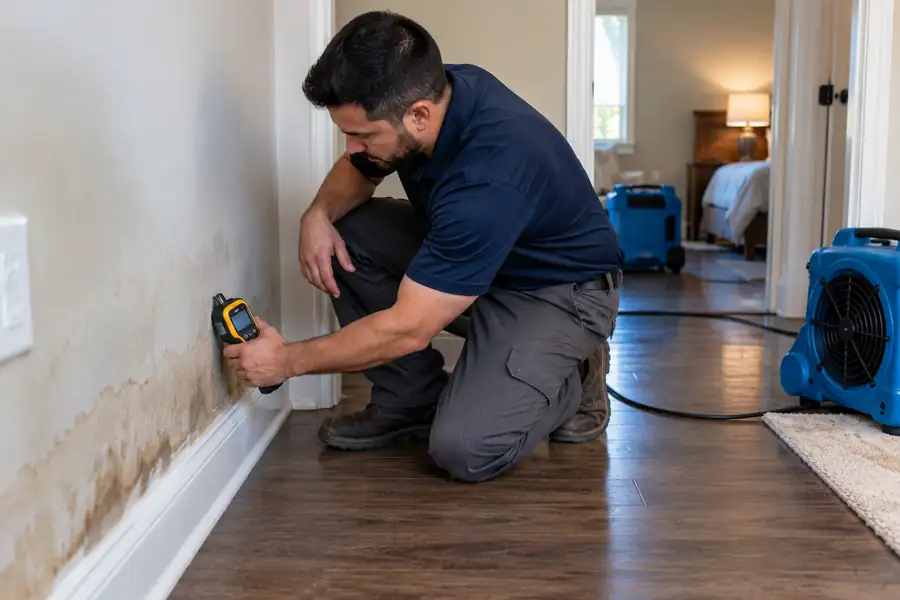
Assessment can include moisture meters, humidity readings and comparison with unaffected materials. Readings should be interpreted in relation to material type, the water source and the path water may have taken.
What Happens After Moisture Is Found
Standing water may require extraction, while absorbed moisture is addressed through structural drying, airflow, dehumidification and monitoring.
Oxnard Property Considerations
Leaks, appliance failures and storm-related water can affect concealed assemblies in Oxnard homes. Larger flood-related repairs can also involve City requirements.
Our Services
Restoration Services for Oxnard Properties
Explore focused services for water, flood, fire and mold-related property damage.
Fire Damage Restoration
Cleanup and restoration planning for fire, smoke, soot and firefighting-water damage.
Learn More →Mold Removal
Moisture-focused removal and cleanup of mold-affected materials in Oxnard properties.
Learn More →Authoritative Guidance
Sources include U.S. EPA moisture guidance and City of Oxnard flood resources.