
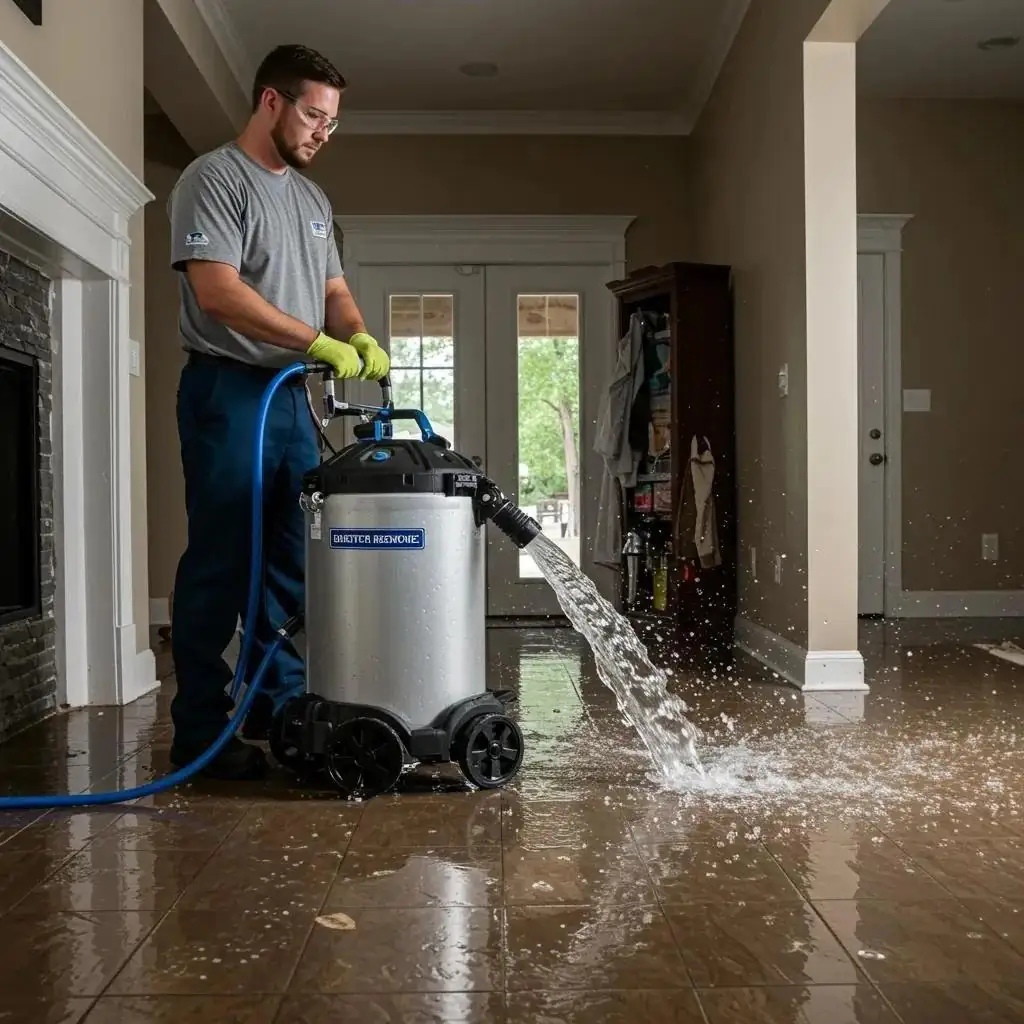
1. Why Equipment Choice Depends on the Water Loss
A shallow appliance overflow on tile does not require the same equipment as deep standing water or saturated carpet. The amount of water, depth, material type, access and contamination concerns all affect tool selection.
The IICRC S500 standard treats equipment, instruments and tools as part of a broader professional restoration process rather than as interchangeable machines. The tool choice should follow the actual extraction scope, not a one-size-fits-all equipment list.
2. Submersible and Transfer Pumps
Pumps are useful when there is enough standing water to move in volume. They are designed to transfer liquid water from one location to another rather than to dry a carpet or measure moisture inside a wall.
A pump can make a dramatic visual difference quickly, but the floor and surrounding materials may still hold moisture after the water level is gone.
3. Portable and Truck-Mounted Extraction Units
Extraction units use vacuum to recover water from surfaces and materials. Portable systems can be moved through a building, while truck-mounted systems remain connected to equipment outside the structure. The right choice depends on access, hose distance, water volume and the materials being treated.
The equipment does not replace assessment. A powerful extractor can remove accessible water without revealing what is trapped under flooring or inside a wall.
4. Carpet and Floor Extraction Tools
Carpet wands, weighted extraction tools and hard-surface tools are designed to improve contact with the material being extracted. The objective is to remove as much recoverable water as practical from the specific surface or assembly.
For carpet and pad, the process may need to address multiple layers rather than just the face fibers.
5. Wet/Dry Vacuums and Small-Scale Cleanup
Wet/dry vacuums can be useful for limited clean-water situations when the equipment is rated for wet pickup and electrical conditions are safe. They are not a substitute for professional equipment when water volume, contamination or hidden moisture makes the situation more complex.
Never use a standard household dry vacuum on standing water or wet carpet.
6. Moisture Meters and Detection Instruments
Extraction equipment answers the question, “How can we remove accessible water?” Moisture instruments answer a different question: “Where is water still present?” Professionals may use moisture meters and other detection tools to compare affected and unaffected materials and map moisture migration.
That information helps determine whether structural drying is needed after extraction.
7. Air Movers and Dehumidifiers Come After Extraction
Air movers and dehumidifiers are commonly associated with water damage restoration, but they do not perform the same task as extraction. Removing liquid water first can reduce the burden on the drying system.
A well-organized sequence is often source control, water extraction, moisture assessment, then drying and monitoring based on what remains wet.
8. Why More Equipment Is Not Automatically Better
A room filled with equipment does not prove the drying plan is appropriate. Equipment quantity should relate to the affected area, material load, environmental conditions and actual drying goals.
Property owners can ask what each piece of equipment is intended to accomplish and how progress will be checked. That is more useful than judging a job by machine count alone.
Where This Topic Fits in the Restoration Process
Water Extraction
Removes accessible standing or recoverable water so the affected area can move toward drying and further assessment.
View Water Extraction →Structural Drying
Addresses moisture that remains in building materials after visible water has been removed.
View Structural Drying →Authoritative Guidance Used for This Guide
The IICRC S500 standard specifically includes equipment, instruments, tools, inspections, materials and drying technology as parts of professional water damage restoration. EPA guidance distinguishes extraction from later drying steps.
Quick Answers
No. Pumps move standing water in volume, while extraction systems use vacuum and specialized tools to recover water from surfaces and materials.
No. Dehumidifiers remove moisture from the air. Standing or recoverable liquid water is normally addressed first with pumping or extraction.
Because a dry-looking surface can still contain moisture. Measurements help identify remaining wet materials and guide drying decisions.