The Simplest Way to Separate the Two Jobs
Think of the event as two connected problems. The first is why water is entering the property. A failed supply line, broken valve, clogged drain, leaking water heater, or damaged pipe may require a plumber. The second problem is what the released water has done to the building. Once moisture reaches drywall, flooring, baseboards, cabinets, insulation, or concealed cavities, restoration work may be needed to remove water and control moisture.
Call a Plumber When the Water Source Needs Repair
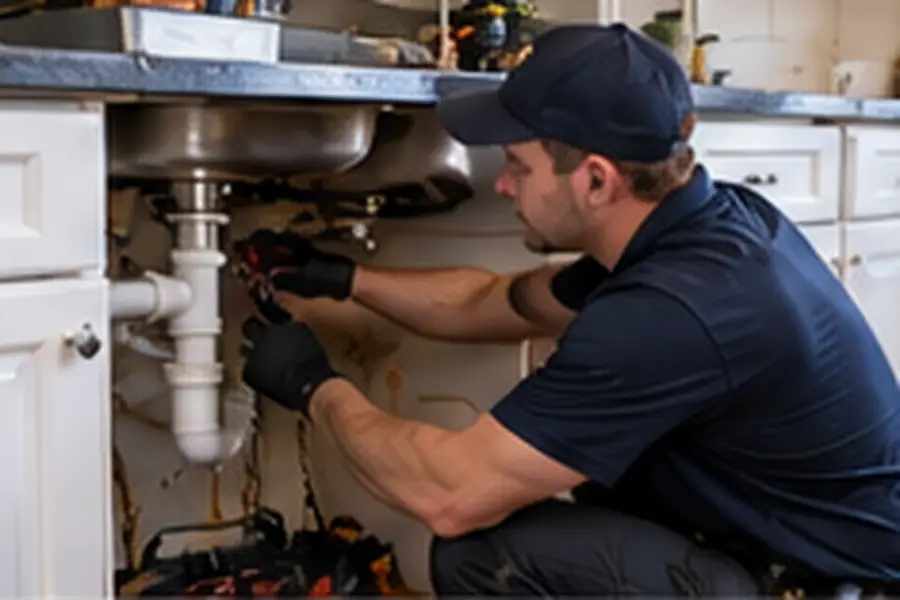
A plumber is the right trade when a pipe, fixture, drain, water heater connection, shutoff valve, or other plumbing component needs diagnosis or repair. If water is actively flowing and you can safely reach the main shutoff, stopping the supply can limit additional damage while you arrange the appropriate repair. Do not open walls, handle electrical components, or enter unsafe areas simply to find a leak.
Call a Restoration Company When Materials Are Wet
Visible standing water is an obvious reason to consider extraction, but it is not the only one. Water can wick into drywall, migrate under flooring, soak carpet cushion, enter cabinet bases, or remain in wall cavities after the visible puddle is gone. Restoration focuses on the affected materials: moisture assessment, water extraction where needed, damage mitigation, structural drying, and monitoring.
When You May Need Both
A burst pipe behind a wall is a common example. The plumber repairs the failed pipe; restoration work addresses the wet drywall, insulation, framing, flooring, and surrounding moisture. The same division can apply to washing-machine supply failures, water-heater leaks, overflowing fixtures, and plumbing leaks above a ceiling. Fixing the source does not automatically dry the structure.
Why Drying Matters After the Plumbing Repair
EPA guidance emphasizes moisture control and recommends drying water-damaged materials within about 24–48 hours where practical to help prevent mold growth. That window is a prevention goal, not a guarantee about when mold will appear. The important point is that materials should not remain wet simply because the leak has stopped.
What to Document Before Cleanup Changes the Scene
Take clear photos and video of the source, standing water, stained surfaces, damaged belongings, and affected rooms when it is safe to do so. California Department of Insurance guidance advises homeowners to protect property from further damage and keep records related to a loss. Coverage depends on the policy and cause, so documentation is useful even when you do not yet know whether a claim will be covered.
A Practical Decision Sequence for Oxnard Property Owners
First, protect people from electrical, ceiling-collapse, or contaminated-water hazards. Second, stop the water source if it can be done safely. Third, arrange the trade needed to repair the source. Fourth, determine how far moisture traveled. If building materials are wet, extraction, mitigation, and structural drying may be appropriate. This sequence keeps source repair and property recovery from being confused.
How Oxnard AquaFix Fits into the Process
Oxnard AquaFix focuses on the property-damage side of a water event: water damage restoration, extraction, mitigation, structural drying, flood cleanup, and emergency water damage response in Oxnard. Plumbing repair itself is a separate trade. If water has already reached building materials, the restoration question is whether those materials can be safely and effectively dried, cleaned, retained, or need further evaluation.
Related Oxnard Water Damage Services
Depending on what became wet, the next step may involve water damage restoration water damage restoration water extraction. The right service depends on whether the property has standing water, absorbed moisture, hidden moisture, or an urgent active loss.
Authoritative Resources Used for This Guide
This article is informed by public guidance from the U.S. Environmental Protection Agency on moisture and mold prevention, the California Department of Insurance on residential property claims and water-damage coverage considerations, and City of Oxnard flood-recovery resources. Policy coverage, permits, and property conditions vary, so use the applicable official guidance for your situation.
Water Damage in an Oxnard Property?
Oxnard AquaFix provides 24/7 emergency water damage restoration for properties in Oxnard, including ZIP codes 93030, 93031, 93032, 93033, 93034, 93035, and 93036.
Contact Us