1. First Decide Whether the Area Is Safe to Enter
Before thinking about vacuums or towels, look for electrical hazards, damaged ceilings, unstable materials, contaminated water and other conditions that make entry unsafe. If electrical equipment or circuits are wet or near standing water, do not enter the water to reach the breaker.
CDC guidance specifically warns against turning power on or off while standing in water. A qualified electrician may be needed to make the area safe.
2. Small Clean-Water Spills Are Different From Larger Losses
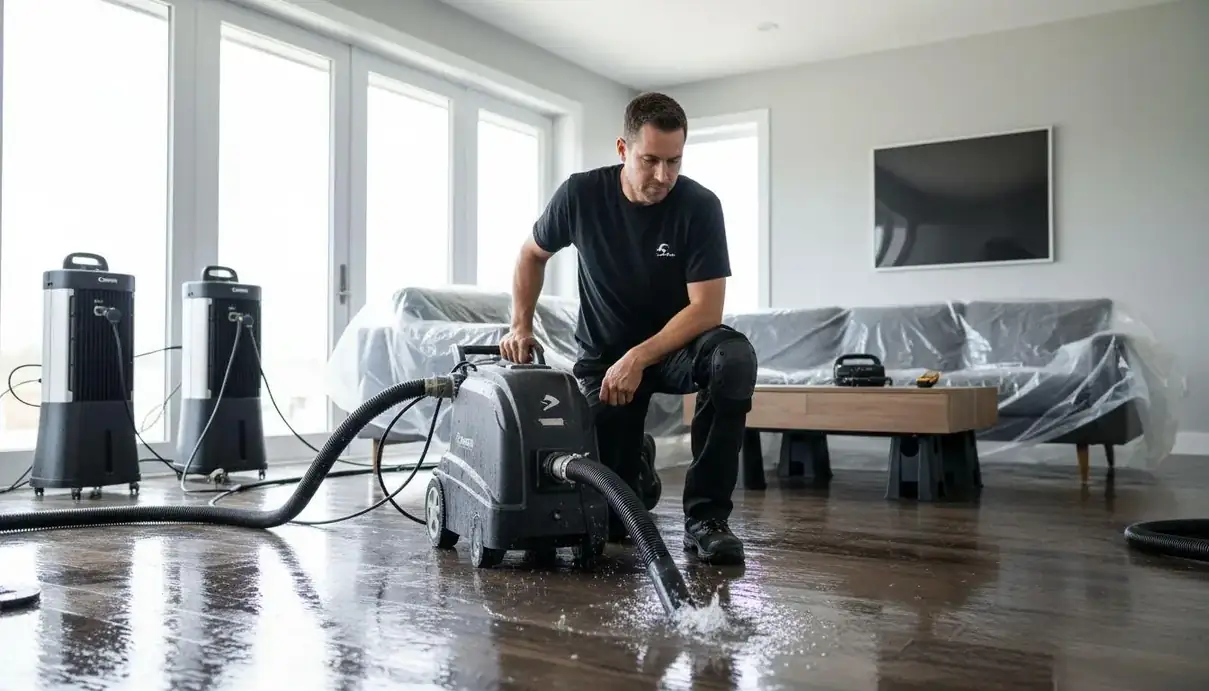
A limited spill from a known clean indoor source that is quickly contained on a hard surface may be manageable with towels or wet-pickup equipment rated for the task. The key is that the situation is small, accessible and clearly understood.
Once water spreads under flooring, reaches drywall, covers multiple rooms or cannot be removed promptly, the problem is no longer just surface cleanup.
3. Do Not Use a Standard Household Vacuum
Standard dry vacuums are not designed to collect liquid water and can create a serious electrical hazard. If wet-pickup equipment is used, it must be specifically rated for that purpose and the electrical conditions must be safe.
Never use electrical tools or appliances while standing in water.
4. Unknown or Contaminated Water Changes the Decision
Water from sewage, drains, outdoor flooding or an unknown source can carry contamination and should not be treated like a clean supply-line spill. Protective equipment, containment and material-removal decisions may be needed.
Oxnard’s storm and flood preparedness guidance advises residents to avoid standing water after storms because it may be contaminated or hide electrical hazards.
5. What If Water Is Under Flooring or Inside Walls?
You may be able to remove the puddle and still leave substantial moisture behind. Water under flooring, in carpet pad or behind baseboards can remain invisible from the surface.
If water has migrated into building materials, professional water extraction and moisture assessment can help define what remains wet.
6. When Professional Extraction Becomes More Appropriate
Professional help becomes more useful when the water volume is more than a small spill, the source is uncertain, multiple rooms are affected, porous materials are saturated, the water has been present for an extended period, electrical safety is uncertain or hidden moisture is likely.
The goal is not to make every spill a professional project. It is to recognize when household cleanup no longer matches the risk or complexity. If the affected area is larger than it first appears, understanding how extraction scope is assessed can clarify the next step.
7. Floodwater Is a Separate Category of Cleanup
If outdoor floodwater entered the property, use a flood cleanup approach rather than the assumptions used for a clean indoor leak. The City of Oxnard maintains local flood recovery resources and safety guidance.
Floodwater can contain contaminants, debris and hidden hazards even when it looks relatively clear.
8. Document Before You Change the Scene
When it is safe, take photos or video before moving damaged materials or removing large amounts of water. If insurance may be involved, notify the insurer and keep receipts for reasonable temporary protective measures.
Do not risk personal safety to create documentation. Safety comes first.
Where This Topic Fits in the Restoration Process
Water Extraction
Removes accessible standing or recoverable water so the affected area can move toward drying and further assessment.
View Water Extraction →Structural Drying
Addresses moisture that remains in building materials after visible water has been removed.
View Structural Drying →Authoritative Guidance Used for This Guide
CDC guidance emphasizes electrical safety around standing water, and the City of Oxnard warns that storm-related standing water may contain contamination or conceal hazards.
Quick Answers
It may be appropriate for a small, clean-water situation if the machine is rated for wet pickup and electrical conditions are safe. It is not a solution for contaminated water or larger hidden losses.
Only if you can do so from a dry, safe location. CDC guidance says not to enter standing water to access the main power switch; call an electrician when that is required.
Floodwater can contain contamination and hidden hazards. Treat it differently from a clean indoor plumbing release and follow local flood-safety guidance.